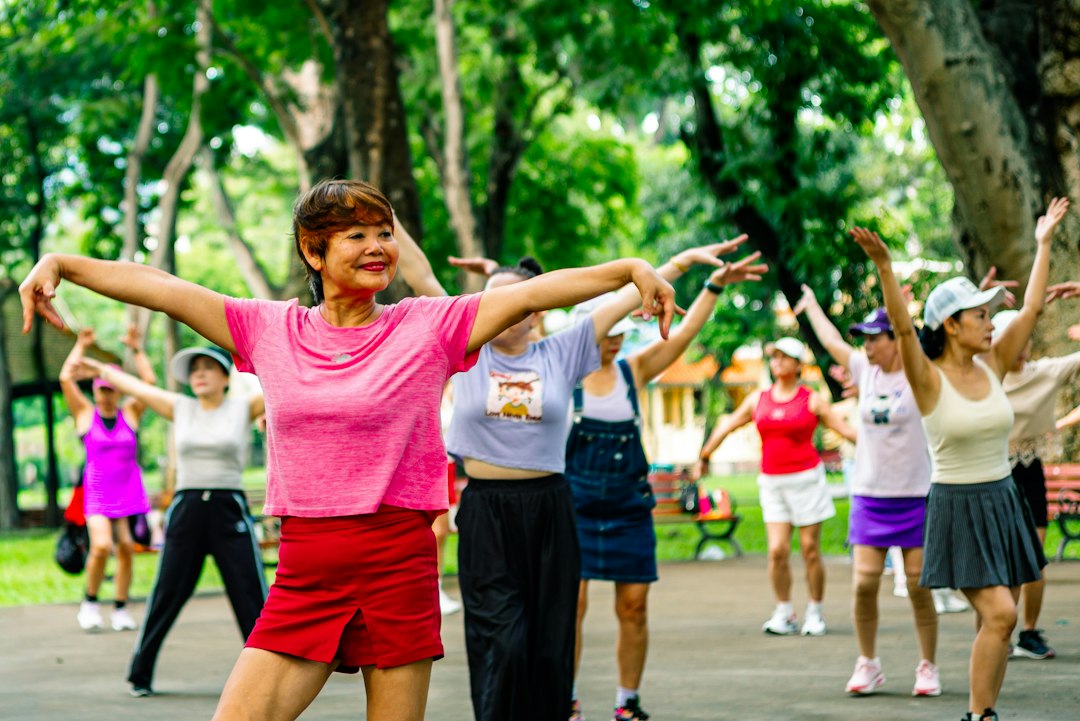
Muscle health is about more than appearance. Learn how strength, nutrition, balance, and appropriate assessment can support everyday capability with age.
Getting older should not automatically mean accepting that every useful task must become harder.
Carrying shopping, climbing stairs, standing up comfortably, keeping balance, and enjoying an active day are meaningful goals. They may not appear in a bodybuilding photo, but they are good reasons to train.
I would start a healthy-aging plan with one question: what do you want to keep doing with confidence?
“Train for the life you want to keep—not only the physique you once had.”
Understand muscle health beyond appearance
Sarcopenia is not simply looking smaller with age. The European consensus places low muscle strength at the center of identifying probable sarcopenia, uses muscle quantity or quality to confirm it, and considers physical performance when assessing severity. [1]
This helps explain why appearance and body weight can be misleading. Someone can have excess body fat and still have clinically important low strength or muscle deficits.
The message is not to diagnose yourself from a difficult chair rise. It is to take meaningful changes seriously. New weakness, repeated falls, worsening mobility, or difficulty with familiar tasks deserve appropriate assessment.
What this means for you: preserving function is a health objective in its own right, not merely a side effect of looking fitter.
Start from capacity, not from age stereotypes
The NSCA position statement supports resistance training in older adults and emphasizes appropriate program design, progression, and individualization. Older age alone does not mean a person cannot benefit from strength training. [2]
But older adults are not one uniform training group. A lifelong exerciser, a previously inactive person, and someone recovering after illness need different starting decisions.
My coaching approach would begin with a few practical questions. Which tasks are comfortable? Which feel insecure? Is pain limiting movement? Is there a history of falling or a medical restriction? What equipment and supervision are available?
These answers should guide the exercise choices. A supported movement or machine can be a sensible tool. It is not an inferior achievement because it looks less athletic than an exercise online.
Build a strength routine that can develop
Here is an illustrative structure to discuss with a qualified professional: a comfortable sit-to-stand or squat pattern, a supported pushing movement, a pulling movement, and an appropriate lower-body or carrying task.
For some people, the first sessions may focus on learning the movement and using a safe setup. Others can begin with more demanding resistance. The aim is to make the work appropriately challenging over time, not to use the same easy activity indefinitely because the person is older. [2]
I would keep a record of one or two stable tasks so progress has a clear meaning. The chair is the same height. The machine is set up the same way. The movement is performed with comparable control.
Do not use a difficult day as proof that training is failing. Also do not ignore a persistent decline by blaming age without investigating it.
Protect nutrition instead of automatically eating less
ESPEN’s geriatric nutrition guidance emphasizes screening for malnutrition, addressing hydration and nutritional needs, and individualizing care. It advises against unnecessary dietary restrictions and recommends caution with weight-reduction strategies in older adults. [3]
That is important in a culture where “healthy eating” is often treated as a synonym for eating less.
My practical suggestion is to review the meals that are actually being eaten. Is shopping difficult? Has appetite changed? Are cooking, chewing, or swallowing creating a barrier? Is a person avoiding food because several competing health rules have become confusing?
The solution may involve a dietitian, clinician, caregiver, or practical help with meals—not simply another instruction to consume more protein.
Appropriate protein and overall nutritional intake matter, but the target must fit kidney function, illness, appetite, and the broader care plan. Do not copy a younger athlete’s diet without considering those differences.
Keep balance and aerobic activity in the picture
Strength is important, but it is not the only physical capacity worth practicing. WHO guidance for older adults includes aerobic and muscle-strengthening activity, with multicomponent work emphasizing balance and functional strength on three or more days weekly when appropriate to ability. [4]
A practical week might therefore include suitable walking or cycling, structured strength work, and supported balance practice. These are categories to adapt—not a requirement to perform a challenging balance drill alone.
My preference is to connect the activity to daily life. Where can movement fit comfortably? Which routines are easier with company? What can be continued when the weather changes or transport becomes inconvenient?
A plan that depends on ideal circumstances needs a fallback. Access and support are part of the design, not evidence that the person lacks commitment.
Frequently asked questions
Am I too old to begin strength training?
Age alone does not rule out benefit. The exercise choice, progression, and level of supervision should reflect current capacity and medical circumstances. [2]
Does a high body weight rule out sarcopenia?
No. Low muscle strength and muscle deficits can coexist with excess adiposity. Assessment should not rely on weight alone. [1]
Should weight loss always be the priority?
No. In older adults, nutritional status, function, illness, and the potential consequences of restriction need careful consideration. Weight reduction may be appropriate in selected circumstances, but it is not a universal first step. [3]
Summary
Healthy aging is not a demand to behave like your younger self. It is a reason to invest in the abilities that support your life now.
Build appropriately challenging strength work. Protect nutrition. Include suitable aerobic and balance activity. Seek assessment for meaningful changes instead of treating every decline as inevitable.
Your next step: choose one everyday task you want to keep doing comfortably. Use it to start a conversation about an appropriate training and nutrition plan.
Disclaimer
Disclaimer: The information provided in our articles is for informational purposes only and is not intended to be a substitute for professional medical advice, diagnosis, or treatment.
Sources
- Cruz-Jentoft AJ, et al. (2019). Sarcopenia: revised European consensus on definition and diagnosis. Age and Ageing, 48(1), 16–31. doi:10.1093/ageing/afy169.
- Fragala MS, et al. (2019). Resistance Training for Older Adults: Position Statement From the National Strength and Conditioning Association. Journal of Strength and Conditioning Research, 33(8), 2019–2052. doi:10.1519/JSC.0000000000003230.
- Volkert D, et al. (2022). ESPEN practical guideline: Clinical nutrition and hydration in geriatrics. Clinical Nutrition, 41(4), 958–989. doi:10.1016/j.clnu.2022.01.024.
- World Health Organization (2020). WHO guidelines on physical activity and sedentary behaviour.





Add comment