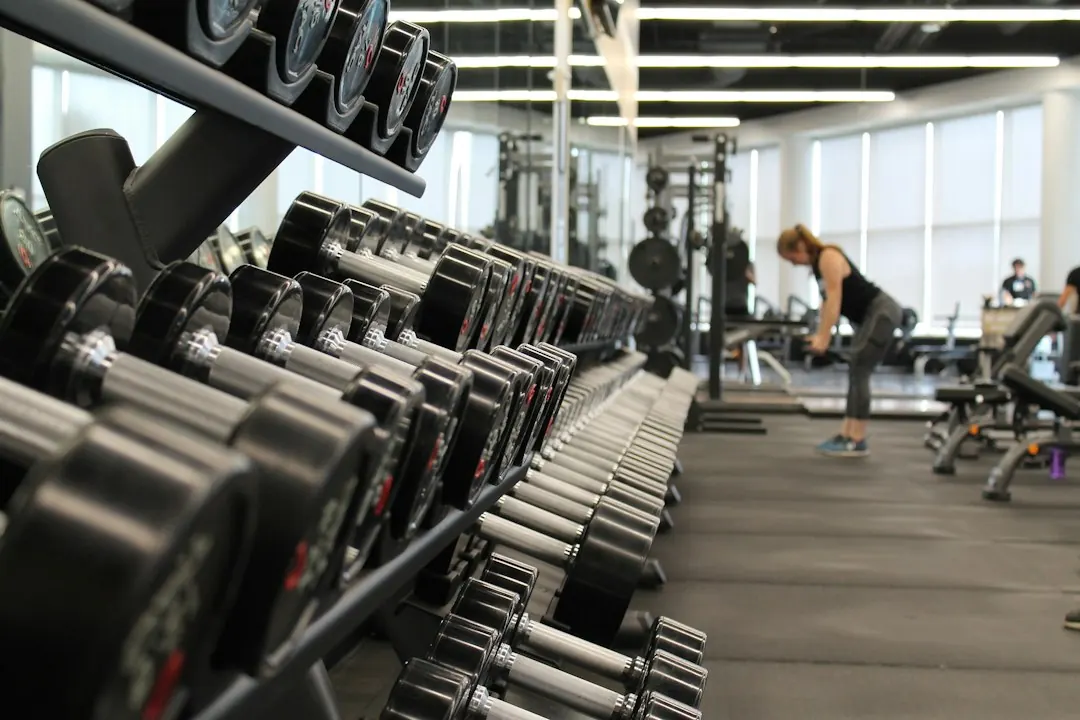
A practical guide to training effort, progression, volume, and consistency—without mandatory failure, complicated systems, or a magical repetition range.
One week you are told that eight to twelve repetitions is the only range that builds muscle. The next, someone insists that every set must end in failure. Then a new training system arrives and your perfectly reasonable routine suddenly feels outdated.
Before changing everything, ask a simpler question: are you practicing useful exercises, working hard enough, and giving that work time to produce progress?
I would build your program around those questions before worrying about its name.
“The best-looking program on paper is not more valuable than the sensible one you keep completing.”
Start with the result you want
Strength, muscle size, skill, and fatigue are related, but they are not the same outcome. A session that leaves you exhausted is not automatically a session that best serves your goal.
The 2026 ACSM position stand supports varied loading schemes for hypertrophy and heavier loading for maximal-strength development. [1]
That gives you permission to stop treating one repetition range as a law. It does not mean every exercise, load, and effort level produces identical results.
For your own plan, write down a primary aim. “Build stronger legs and improve overall muscle size” is more useful than “do whatever workout looks hardest today.” Then choose a small set of exercises you can practice and compare over time.
Train with effort, not with an obligation to fail
ACSM’s evidence synthesis does not support making absolute muscular failure compulsory for results. [1]
A practical coaching option is to finish many working sets when you believe you could still complete a small number of good repetitions. This is often described as repetitions in reserve, or RIR. It is a way to describe effort, not an exact measurement of your physiology.
For example, I might ask a lifter to finish a set with roughly two repetitions left rather than chase a final repetition that changes the movement completely. That is a useful instruction—not proof that precisely two repetitions is universally optimal.
Beginners should first learn what controlled, repeatable repetitions feel like. An estimate becomes more useful with practice. On an unfamiliar exercise, “stop while the movement remains controlled” may be a better instruction than demanding an exact RIR number.
Build a repeatable starting program
Here is an illustrative two-day full-body template for a generally healthy adult who can perform the exercises comfortably. It is not an individual prescription.
Session A: a squat or leg-press pattern, a horizontal push, a row, a hip-hinge pattern, and a manageable trunk exercise.
Session B: a split-squat or supported step-up pattern, another comfortable pushing exercise, a pulldown or row, a hip-extension exercise, and a carry or trunk exercise.
Start with a small, manageable amount of work. Two controlled working sets per exercise can be a coaching starting point. Choose loads that allow you to practice rather than survive the session. Rest long enough that breathlessness does not become the main reason the next set ends.
Keep the sessions on days you can actually protect. Machines, free weights, bands, and suitable home exercises can all have a place; equipment prestige is not the goal. ACSM supports training the major muscle groups at least twice weekly, while the ideal prescription depends on the outcome and individual. [1]
Progress without turning every session into a test
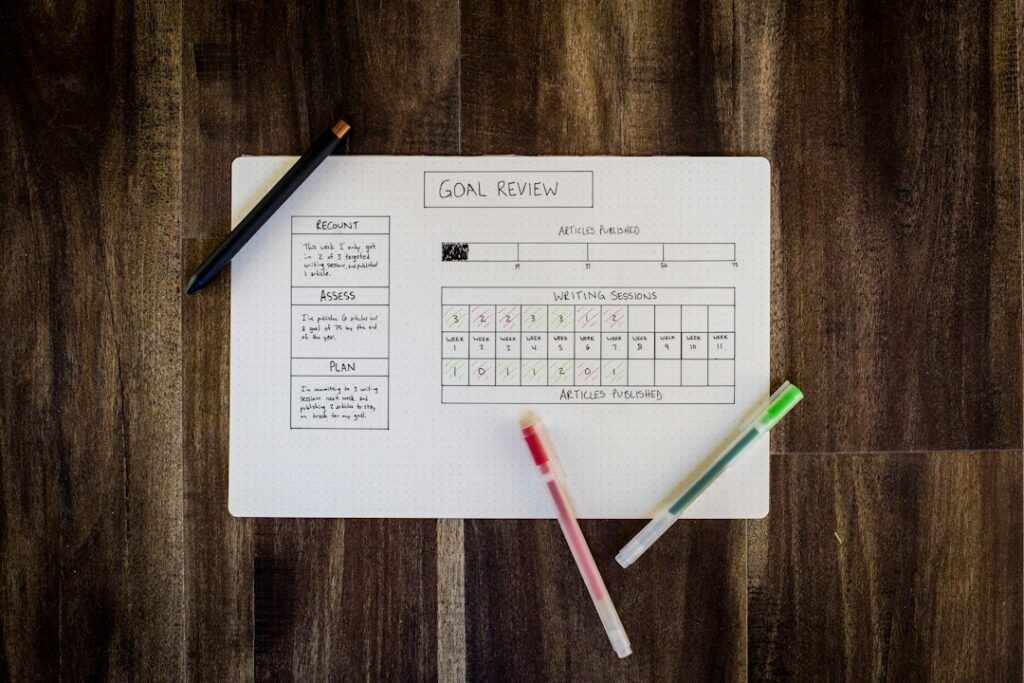
I suggest using a simple training log: exercise, load, repetitions, and a brief note on effort or technique.
One coaching method is to select a comfortable repetition bracket, such as eight to twelve. When you can repeatedly reach its upper end with the intended control and effort, increase the load modestly and build back up. The bracket organizes progression; it is not a biological muscle-building boundary.
Do not change load, exercise, tempo, and set count simultaneously. Then you cannot tell what helped or what created the problem.
ACSM associates higher volume with greater hypertrophy, but does not make an advanced workload a beginner’s entry requirement. [1]
Before adding sets, ask whether you are completing the current ones consistently. A program cannot benefit from work that exists only in the plan.
Solve the real bottleneck
A stalled week does not prove you need a new system. First compare several weeks of training, not one poor session.
My coaching review starts with completion: were the planned sessions actually done? Next comes comparability: were range of motion, exercise setup, and effort reasonably similar? Then I look at the surrounding routine.
Protein supplementation can modestly augment the gains produced by resistance training, but it is not a substitute for the training itself. [2] Acute sleep loss can also impair physical performance, although its effects vary with the task and circumstances. [3]
These findings do not mean one late night or imperfect meal ruins your progress. They mean a difficult week may require an ordinary explanation rather than an extraordinary new program.
When fatigue is accumulating, a temporary reduction in demanding work is a reasonable coaching adjustment. Persistent pain, unexplained weakness, or symptoms beyond normal exertion need assessment—not a more aggressive motivational speech.
Frequently asked questions
Do I need advanced systems such as drop sets?
Not to make a program legitimate. First establish exercises, appropriate effort, and a progression process. Use a special method for a clear practical reason, not because a basic program looks insufficiently complicated. [1]
Can a shorter routine still be worthwhile?
Yes. Start with the work you can reliably perform. This is different from claiming that the smallest possible dose maximizes every outcome. A manageable starting point can be developed later. [1]
Should I be sore after every workout?
Soreness is not the outcome I would use to score your program. Record what you performed and how you are progressing instead of deliberately chasing discomfort.
Summary
Build muscle with a program you can understand, repeat, and gradually develop.
Keep enough consistency to learn what works. Use effort without making exhaustion the objective. Add complexity only when it solves a real problem.
Your next step: choose the exercises you will keep for the coming training block and start a simple log. Give that routine a fair trial before replacing it with another name.
Disclaimer
Disclaimer: The information provided in our articles is for informational purposes only and is not intended to be a substitute for professional medical advice, diagnosis, or treatment.
Sources
- Currier BS, et al. (2026). American College of Sports Medicine Position Stand. Resistance Training Prescription for Muscle Function, Hypertrophy, and Physical Performance in Healthy Adults: An Overview of Reviews. Medicine & Science in Sports & Exercise, 58(4), 851–872. doi:10.1249/MSS.0000000000003897.
- Morton RW, et al. (2018). A systematic review, meta-analysis and meta-regression of the effect of protein supplementation on resistance training-induced gains in muscle mass and strength in healthy adults. British Journal of Sports Medicine, 52, 376–384. doi:10.1136/bjsports-2017-097608.
- Craven J, et al. (2022). Effects of Acute Sleep Loss on Physical Performance: A Systematic and Meta-Analytical Review. Sports Medicine, 52, 2669–2690. doi:10.1007/s40279-022-01706-y.



Add comment