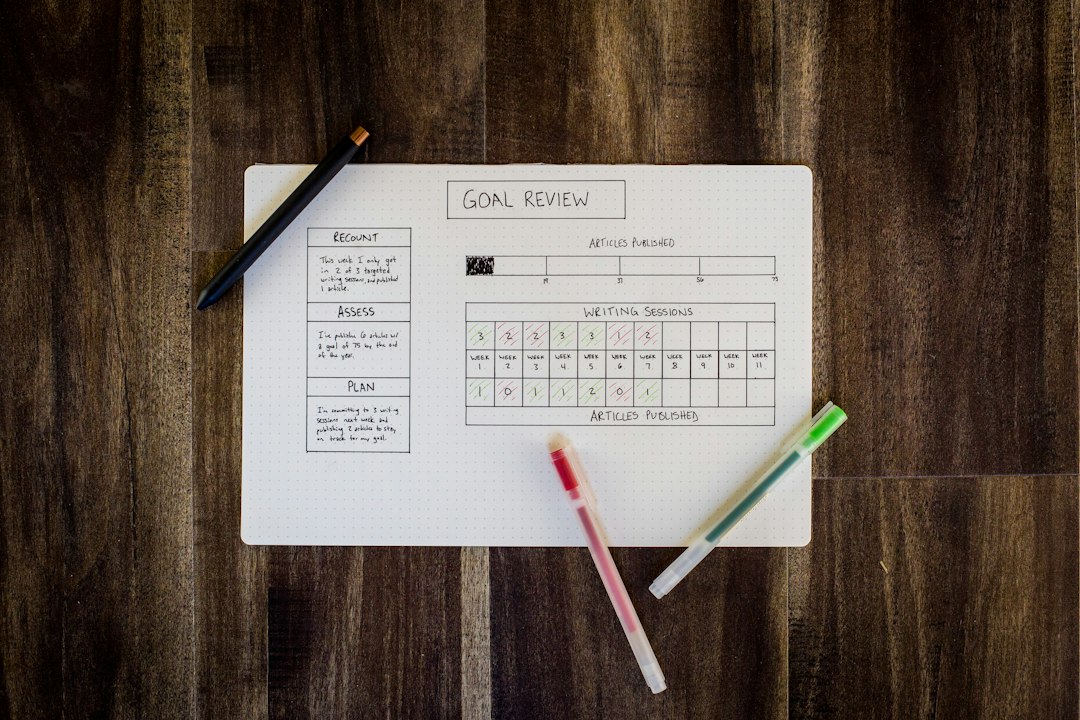
A practical plan for moving sessions, shortening busy days, and returning without creating training debt.
You planned three gym visits. The first went well, the second disappeared into a late meeting, and now the third feels like a reminder of the week you failed to complete. Should you double the next workout, start the whole program again, or wait for a cleaner Monday?
An interrupted week needs a decision you can repeat. It does not need a punishment session. For ordinary recreational training, the useful task is to preserve the important work while making the next visit realistic.
This guide is about handling interruptions in a program you already have. If choosing the basic exercises is still the main problem, begin with a suitable starting program before trying to perfect its rescheduling rules.
For a starting exercise menu and a simple two-day example, see the basic muscle-building guide.
Decide how you will return before a missed session becomes a reason to abandon the week.
First identify what was missed
A missed workout can mean several things. You may have lost one full-body session, one lower-body day in a rotating split, or an optional accessory visit. Those situations leave different gaps.
Write down the session’s role rather than simply counting the empty calendar box. Which muscles or movements would it have trained? Was it the week’s only direct practice of an important lift? Was it optional work added to an otherwise complete routine?
This is a coaching review, not a formula for calculating how much progress you lost. One missing visit cannot tell you what happened to muscle growth, and the printed plan is not a debt ledger.
Choose one rescheduling rule
For a rotating sequence, continuing with the next uncompleted session is often practical. If the sequence is upper A, lower A, upper B, lower B, a missed lower A can remain the next session when you return.
Another option is to resume the calendar and accept less work that week. That can suit a full-body plan in which the remaining sessions still cover the main tasks. It can be less suitable when the same region is repeatedly skipped.
Neither rule is universally better. Choose according to the program, available days, and nearby training demands. Write the rule into your log so that you do not redesign the week while already feeling rushed.
Competition preparation can require more specific planning. A fixed event, technical practice, and other sport sessions may make a simple recreational rule insufficient. Use qualified coaching when those constraints matter.
A worked example: a four-session sequence
Imagine a healthy experienced lifter planning upper A on Monday, lower A on Tuesday, upper B on Thursday, and lower B on Friday. Tuesday is unexpectedly unavailable.
If another suitable window exists, lower A could move into it while the rest of the week is adjusted to preserve reasonable recovery and the purpose of each session. Moving the workout does not mean every other appointment must stay fixed.
If only Thursday and Friday remain, the lifter could continue with lower A and upper B, then make lower B the next session in the sequence. That changes the calendar distribution and reduces the week’s total work. It should be recorded as an interrupted week, not advertised as an identical version of the original plan.
The important decision is continuity. The person knows what comes next without combining two demanding lower-body sessions into one emergency workout.
Make a shorter session before you need it
Some interruptions remove the visit entirely. Others leave you with a smaller window. Prepare a short version that keeps the session’s main task and a manageable amount of complementary work.
For example, a normal visit might contain a lower-body movement, a press, a pull, and several accessories. Its fallback could preserve the first three, with fewer optional sets. Warm-ups and adequate rest still belong in the session.
That is an organizational example, not a validated minimum dose or proof that the short version produces the same results. The time saving comes mainly from doing less work, not rushing everything that remains.
Write the omissions in advance. Otherwise, arriving late can lead either to abandoning a useful visit or trying to force the entire routine into time you do not have.
Do not repay the week with extra fatigue
Doubling the next session changes its workload and may make the following visits harder to complete. Adding failure sets or intense finishers also changes the demands; it does not restore a missing session exactly.
For ordinary training, accepting a lower dose for one interrupted week is often easier to manage than trying to make the calendar look perfect. That is a practical choice, not a claim that dose never matters.
Helms and colleagues emphasize adherence and flexible, realistic training in The Muscle & Strength Pyramid: Training. The useful application is to build a routine that survives ordinary interruptions while retaining a clear purpose. It is not a numerical guarantee that consistency cancels every programming problem. [1]
Recognize when the fallback has become the main plan
A short version is useful for an occasional busy day. If you need it almost every visit, revise the normal program around the time you actually have.
Compare your reliable schedule with your optimistic one. Three visits that usually happen are a more useful planning reference than four visits that repeatedly leave the same session unfinished. Include travel, changing, warming up, and getting home in the time budget.
The 2026 ACSM overview found that varied resistance-training approaches improve useful outcomes. It does not identify one mandatory schedule for every person. Its underlying review search extended through October 2024, so the publication year should not be confused with complete coverage of all 2026 research. [2]
Use that flexibility to choose a workable structure. It is not permission to call every amount of training equally effective for every ambition.
Match support to the reason visits disappear
Uncertainty about an exercise, difficulty selecting loads, and an overloaded calendar require different solutions. More information will not create a training window, while a calendar reminder will not teach an unfamiliar movement.
A 2025 randomized trial compared ten weeks of supervised, app-guided, and PDF-guided training in trained adults. Attendance was higher in the supported conditions than in the PDF-only condition. The result concerns those specific programs and participants; it does not establish that every app is better than every written plan. [3]
Choose support that addresses your obstacle. That might mean instruction, a more realistic appointment, a written fallback, or a brief review of the actual log with a coach. Avoid buying another program when the unresolved problem is still how the current one fits the week.
Return after a longer break with a different question
Missing one ordinary visit is different from returning after illness, injury, or several weeks away. Your first task is to re-establish the intended movements and an appropriate challenge, rather than prove that the old numbers are still available.
Use the warm-up and early working sets to inform a conservative return. A reduced load or fewer sets can be a reasonable coaching adjustment, depending on the length and cause of the interruption. There is no exact reduction that fits everyone.
A health-related break may require professional guidance. Do not use a rescheduling article to decide whether concerning symptoms have resolved or an injured area is ready for normal loading.
Review completion without judging your character
At the end of a block, compare planned visits with completed ones. Record which session was missed, what you changed, and whether the fallback helped you return.
Look for a recurring pattern. If one region is repeatedly skipped, change the sequence or the schedule. If late visits are consistently shortened, move important work earlier or reduce the normal exercise list. If the routine is happening and performance is improving, keep the rule simple.
Also leave room for aerobic activity and ordinary movement. WHO guidance includes strengthening the major muscle groups on at least two days alongside aerobic activity. It is a public-health reference, not a verdict that a week below a target has no value. [4]
Frequently asked questions
Should I start the program again after one missed visit?
Usually you can resume or reschedule according to the plan’s structure. Starting from the beginning each time can make continuity harder.
Should I add all the missed sets to the next workout?
Not automatically. Review what they would add to that session and the rest of the week. Keeping the next visit manageable may be the better decision.
What if the same session keeps disappearing?
Treat that as a scheduling problem worth correcting. A rotating sequence or a smaller reliable program may give the work a more consistent place.
Summary
Identify the missed session’s role, choose a clear return rule, and prepare a shorter version for busy days. Accept an interrupted week without disguising it as an identical training dose. Your next step is to write one sentence in your log explaining what you will do when the next planned visit cannot happen.
Disclaimer
Disclaimer: The information provided in our articles is for informational purposes only and is not intended to be a substitute for professional medical advice, diagnosis, or treatment.
Sources
- Helms E, Morgan A, Valdez A. (2018). The Muscle & Strength Pyramid: Training. Second edition. Relevant source pages: 21–44.
- Currier BS et al. (2026). American College of Sports Medicine Position Stand. Resistance Training Prescription for Muscle Function, Hypertrophy, and Physical Performance in Healthy Adults: An Overview of Reviews. Medicine & Science in Sports & Exercise, 58(4), 851–872. Published in 2026; its review search covered literature through October 2024. DOI: 10.1249/MSS.0000000000003897
- Gavanda S et al. (2025). Optimizing Resistance Training Outcomes: Comparing In-Person Supervision, Online Coaching, and Self-Guided Approaches: A Randomized Controlled Trial. Journal of Strength and Conditioning Research, 39(11), 1129–1137. DOI: 10.1519/JSC.0000000000005216
- World Health Organization (2020). WHO guidelines on physical activity and sedentary behaviour. Geneva: World Health Organization. Official source







Add comment