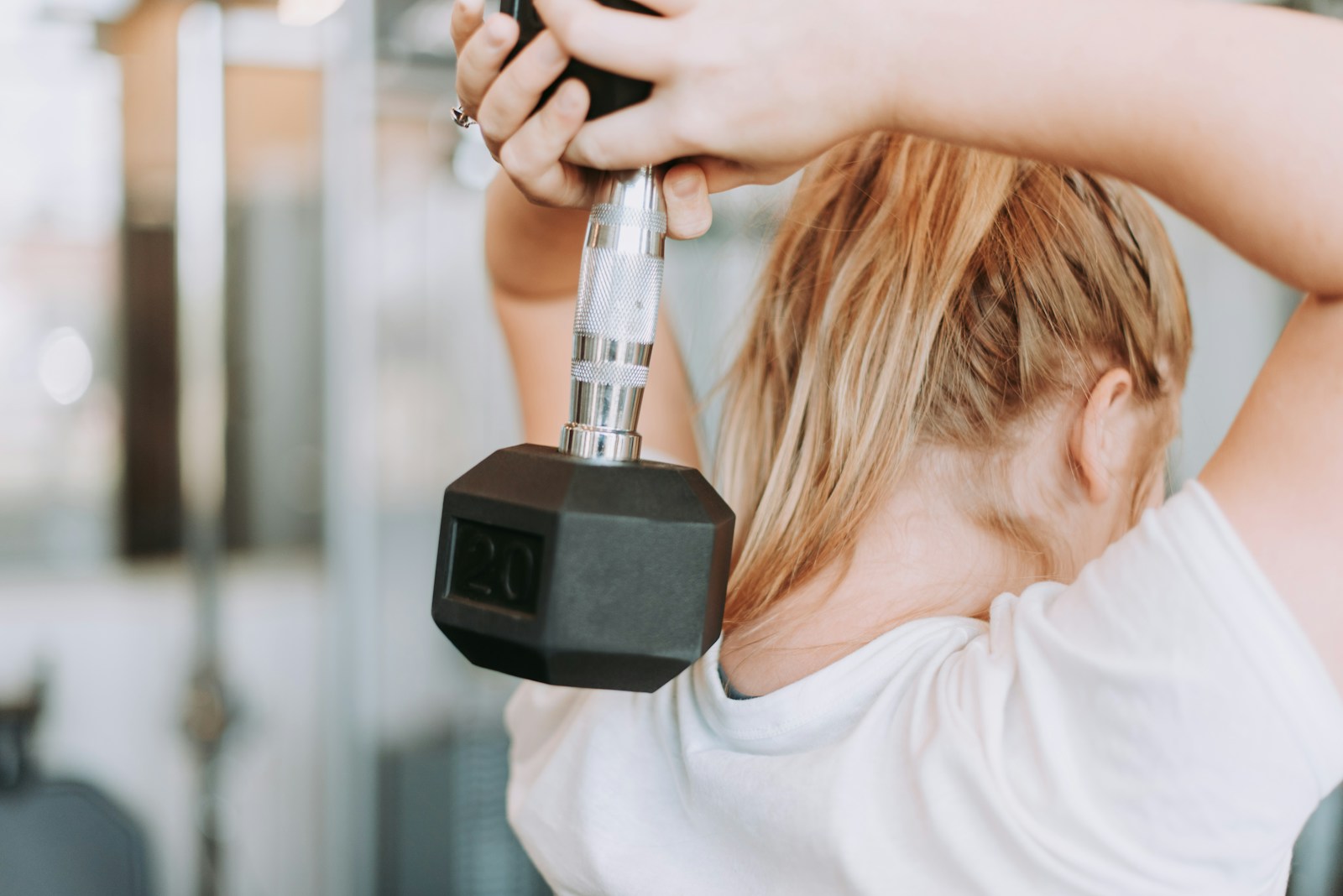
A few useful notes can help you see what is changing in your training and approach your next session with a clearer sense of direction.
You finish a workout feeling good, then wonder whether you are actually moving forward. Last week’s weights are a blur. Today’s final set felt harder, but you cannot remember how many repetitions you managed before.
A simple training log gives those impressions context. With Foxy’s three core full-body sessions each week and new workouts every four to five weeks, you have a practical period in which to learn the exercises, follow the instructions and record what happens.
Record the details you can use next time
Start with the exercise, load and repetitions completed in each working set. Add the prescribed rest period and a short note when something affects the comparison: a different machine, a changed exercise setup or an unusually tiring day.
For dumbbells, specify whether your entry means the weight of each dumbbell or the combined load. For a machine, use the same machine when making direct comparisons; matching numbers on different machines do not necessarily describe the same task.
A notebook or a simple note on your phone is enough. Keep it brief enough that you will actually use it.
Foxy · Women-only training
Explore Foxy, a women-only, glute-focused training plan with workouts delivered in the app.
Women-only · Workouts delivered in the app


Progress can take more than one form
An eight-week trial in trained adults, including women, found both repetition and load progression workable. This supports flexibility within a program; it does not establish identical outcomes for everyone or validate Foxy. [1]
Follow the current workout’s repetition ranges, set structure and loading instructions. An extra repetition is useful only when it fits those instructions. A heavier weight should still allow you to perform the intended movement. There is no requirement to add weight every Monday.
Give each block a clear reference point
Foxy already provides the exercise choices, sets and repetitions for each session. That structure gives your notes a reference: what was planned and what you completed. Returning to the workouts within a block lets you revisit familiar tasks and keep your attention on their execution.
Review the exercise videos before starting a new block. Read the accompanying notes, including any special set or week-one instructions. Clarify anything unclear instead of guessing what a label means.
When the exercise changes, establish a fresh reference point. The number you squat in one block cannot be directly compared with the number you hip thrust in another. Even a change in equipment or execution can make an old personal best a poor target.
A trial in young women found similar strength and muscle gains with repeated exercises and planned variation between sessions within each week. It did not test Foxy’s four-to-five-week updates: these organize the program, but changing exercises alone does not demonstrate growth. [2]
Foxy · Women-only training
Explore Foxy, a women-only, glute-focused training plan with workouts delivered in the app.
Women-only · Workouts delivered in the app

Look for a pattern across sessions
At the end of a block, review comparable sessions. Did you complete the planned work more consistently? Did repetitions or loads improve while your execution stayed controlled? Which exercises still need clarification?
If performance falls repeatedly, bring the actual records to a coaching conversation. They give you something concrete to discuss. One difficult workout does not tell the whole story, and a heavier lift does not directly measure muscle growth.
If you use the optional glute sessions, include them in the same record. The purpose is a fair view of your whole training week.
For a clear plan to work from, explore Foxy, Todoroff Performance’s strength program for women. Its full-body training, glute focus and exercise videos give you a ready structure to follow. Bring one simple habit to your next session: write down what you actually did.
Disclaimer
Disclaimer: The information provided in our articles is for informational purposes only and is not intended to be a substitute for professional medical advice, diagnosis, or treatment.




Add comment