
How body-weight and fat-free-mass targets differ, and how to keep the number compatible with a workable diet.
You choose a protein target for dieting, then find a second recommendation that looks much higher. Before deciding that your plan is inadequate, check what the number is multiplied by. A range per kilogram of fat-free mass can look alarming when mistakenly applied to total body weight.
Protein planning matters during fat loss, but the calculation should support your training and meals rather than push intake upward without a clear reason.
Why the dieting context matters
An energy deficit can affect lean tissue as well as fat. Resistance training and adequate protein are complementary parts of a muscle-conscious plan; neither guarantees perfect preservation. The severity of restriction, starting leanness, and training demands influence the decision. [1]
A frequently cited athletic weight-loss range is approximately 1.6-2.4 g/kg/day. This is context-dependent guidance, particularly relevant to athletes, rather than a universal instruction that everyone dieting must reach 2.4. A hypothetical healthy 80 kg recreational lifter considering 1.8-2.0 would calculate 144-160 g daily. [1]
These are planning examples, not personalized prescriptions. Someone with substantial excess body fat may need a reference-weight approach. A very lean competitor and someone beginning weight management for health also have different priorities.
The 2.3-3.1 range uses fat-free mass
The influential review proposing 2.3-3.1 g/kg expressed the quantity per kilogram of fat-free mass, not total weight. It concerned lean resistance-trained athletes during energy restriction and included only six studies. It should not be presented as a universally validated optimum. [2]
Suppose an 80 kg person is estimated to have 64 kg of fat-free mass. Multiplying 64 by 2.3-3.1 gives approximately 147-198 g daily. Multiplying the same range by 80 gives 184-248 g, a different and substantially higher target. A body-fat estimate also carries uncertainty; more elaborate arithmetic does not remove it.
Write the denominator beside the recommendation before doing the calculation. Then check whether its research population resembles your circumstances. When medical or nutritional considerations complicate the choice, a dietitian can reconcile the numbers with the wider plan.
Higher intake does not always improve the result
A 2025 trial assigned 21 college-aged recreational athletes to approximately 1.2, 1.6, or 2.2 g/kg/day during six weeks of a 25% energy reduction and resistance training. Body composition and strength improved without a clear protein-group advantage. [3]
That small, brief trial cannot establish equivalence for every athlete, especially lean competitors during prolonged preparation. It does challenge the claim that raising protein must improve outcomes in every dieting context. Adequacy deserves attention; endless escalation does not follow from it.
Keep the deficit compatible with recovery
Protein cannot erase underfueling. A meta-analysis found energy deficiency impaired lean-mass gains during resistance training, while strength could still improve. Getting stronger therefore does not, by itself, prove every aspect of muscle mass was preserved. [4]
A practical approach is to start with a manageable reduction and evaluate the pattern rather than use the largest restriction you can tolerate. Persistent exhaustion, repeated injuries, menstrual changes, or worsening performance deserve broader assessment. Adding protein may leave the main energy problem untouched. [5]
Turn the target into actual meals
For an illustrative 150 g day, three meals contributing about 40 g and an optional 30 g eating occasion reach the total. Another distribution can work too. This is organization, not evidence that a particular frequency is superior.
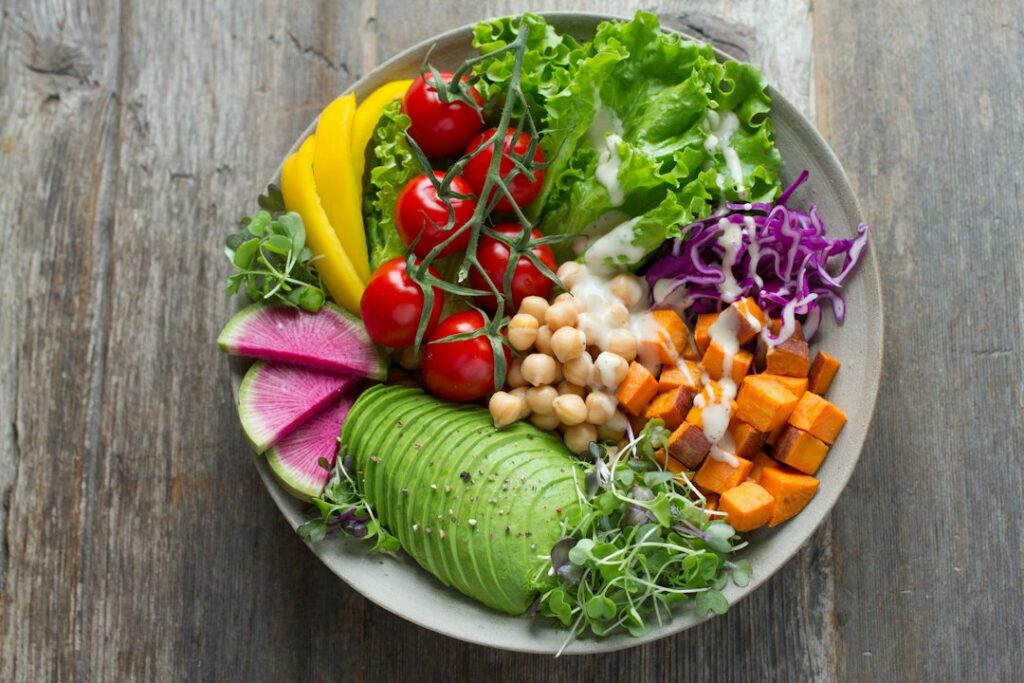
Start with a substantial protein source, then include suitable carbohydrate, fruit or vegetables, and fats. Check actual portions and labels. Foods containing protein differ greatly in calories and accompanying nutrients: nuts and cheese are not interchangeable with lean fish or a relatively lean soy product.
Consider the whole meal, including oils, sauces, and drinks. Those foods can fit; the point is that a protein-containing ingredient cannot describe total energy intake on its own.
Review the plan before adding a special protocol
Keep familiar resistance exercises and compare load, repetitions, and recovery over time. Review body-weight trends and consistent waist measures alongside training. None directly measures muscle perfectly; short-term lean-mass changes can also reflect water and glycogen.
Very-high-protein days or protein hyperfeeds are not established requirements for superior fat loss or muscle preservation. A pleasant higher-protein meal is different from a proven metabolic reset. Controlled overfeeding research also found similar fat gain across protein conditions: protein calories remain part of energy balance. [6]
Frequently asked questions
Should protein rise indefinitely as calories fall? No. When a diet becomes too restrictive, reducing the deficit may be more useful than adding more protein. [1]
Can three meals be enough? Yes, if portions provide an appropriate total. A snack or powder can solve a practical gap without becoming compulsory.
Our guide to protein and fat storage explains the overfeeding distinction in more detail.
Summary
Check the population and weight basis behind a protein recommendation. Choose an achievable intake, retain appropriate resistance training, and keep restriction manageable. Your next step is to write out the calculation with its denominator and compare the result with meals you can comfortably repeat.
Disclaimer
Disclaimer: The information provided in our articles is for informational purposes only and is not intended to be a substitute for professional medical advice, diagnosis, or treatment.
Sources
- Hector AJ, Phillips SM (2018). Protein Recommendations for Weight Loss in Elite Athletes: A Focus on Body Composition and Performance. International Journal of Sport Nutrition and Exercise Metabolism. 28:170-177. DOI: 10.1123/ijsnem.2017-0273.
- Helms ER, Zinn C, Rowlands DS, Brown SR (2014). A systematic review of dietary protein during caloric restriction in resistance trained lean athletes: a case for higher intakes. International Journal of Sport Nutrition and Exercise Metabolism. 24:127-138. DOI: 10.1123/ijsnem.2013-0054.
- Kanaan MF, Nait-Yahia S, Doucet É (2025). The effects of high protein intakes during energy restriction on body composition, energy metabolism and physical performance in recreational athletes. European Journal of Clinical Nutrition. 79:544-552. DOI: 10.1038/s41430-025-01585-2.
- Murphy C, Koehler K (2022). Energy deficiency impairs resistance training gains in lean mass but not strength: A meta-analysis and meta-regression. Scandinavian Journal of Medicine & Science in Sports. 32:125-137. DOI: 10.1111/sms.14075.
- Sims ST, Kerksick CM, Smith-Ryan AE, et al. (2023). International society of sports nutrition position stand: nutritional concerns of the female athlete. Journal of the International Society of Sports Nutrition. 20:2204066. DOI: 10.1080/15502783.2023.2204066.
- Bray GA, Smith SR, de Jonge L, et al. (2012). Effect of dietary protein content on weight gain, energy expenditure, and body composition during overeating: a randomized controlled trial. JAMA. 307:47-55. DOI: 10.1001/jama.2011.1918. A 2012 correction concerned the composition of the return-to-baseline diet, not the finding of similar fat gain; DOI 10.1001/jama.2012.286.






Add comment